1. Java Inheritance là gì?
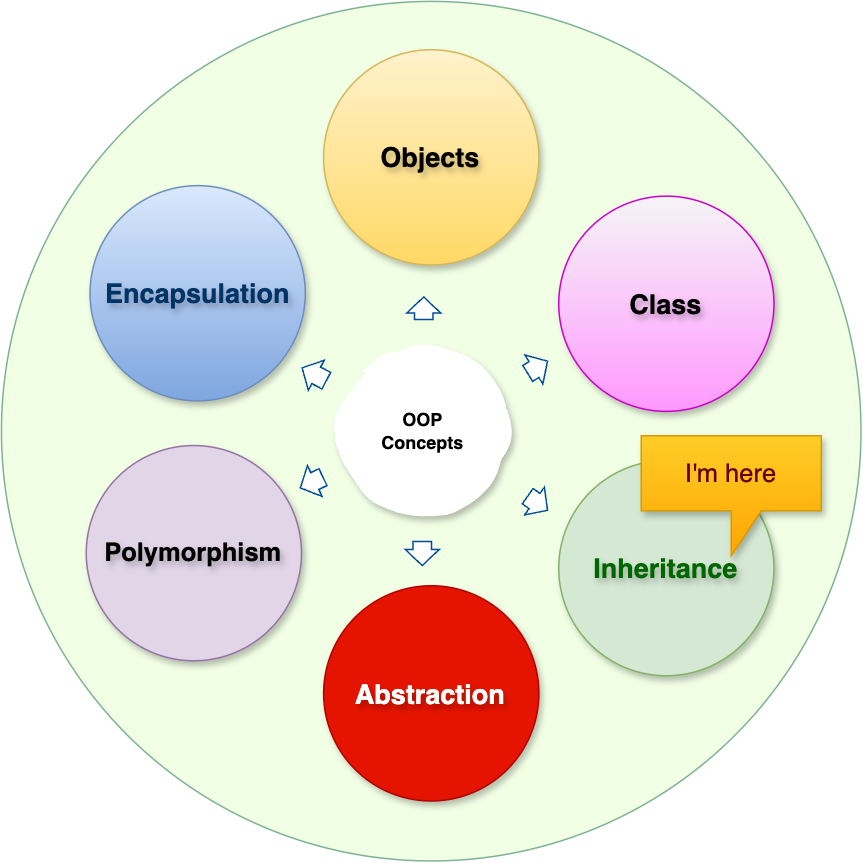
Trong thế giới sinh vật thì các thế hệ con cái kế thừa các đặc điểm tính chất của cha mẹ là điều hết sức hiển nhiên hay việc con người có thể xây dựng nên các bộ khung hoặc biểu mẫu để có thể tái sử dụng nhiều lần nhờ đó mà có thể tiết kiệm được thời gian và tiền bạc trong sản xuất. Trong lập trình hướng đối tượng thì tính kế thừa được định nghĩa và thể hiện như là các interface và class abstract.
2. Interface
Interface là bản thiết kế của một lớp. Nó có các hằng số tĩnh và phương thức trừu tượng.
public interface {
// declare constant fields
// declare methods that abstract
// by default.
// static method
}– Ví dụ:
public interface SampleInterface {
// constant fields
String name = "Tây Java";
// abstract methods
void method1();
int method2();
String methodN();
// default method
default void sayHello() {
System.out.println("Đây là sample interface");
}
// static method
static String getCurrentTime(){
return String.valueOf(LocalDate.now());
}
}3. Tại sao sử dụng Interface ?
Có ba lý do chính để sử dụng Interface như sau:
- Interface được sử dụng để đạt được sự trừu tượng.
- Theo Interface, chúng ta có thể hỗ trợ khả năng đa kế thừa.
- Có thể được sử dụng để đạt được sự kết hợp lỏng lẻo.
4. Mối quan hệ giữa class và interface
Java đưa tính kế thừa vào trong lập trình hướng đối tượng thông qua 2 từ khoá là extends và implement để thể hiện việc kế thừa giữa các class và interface.
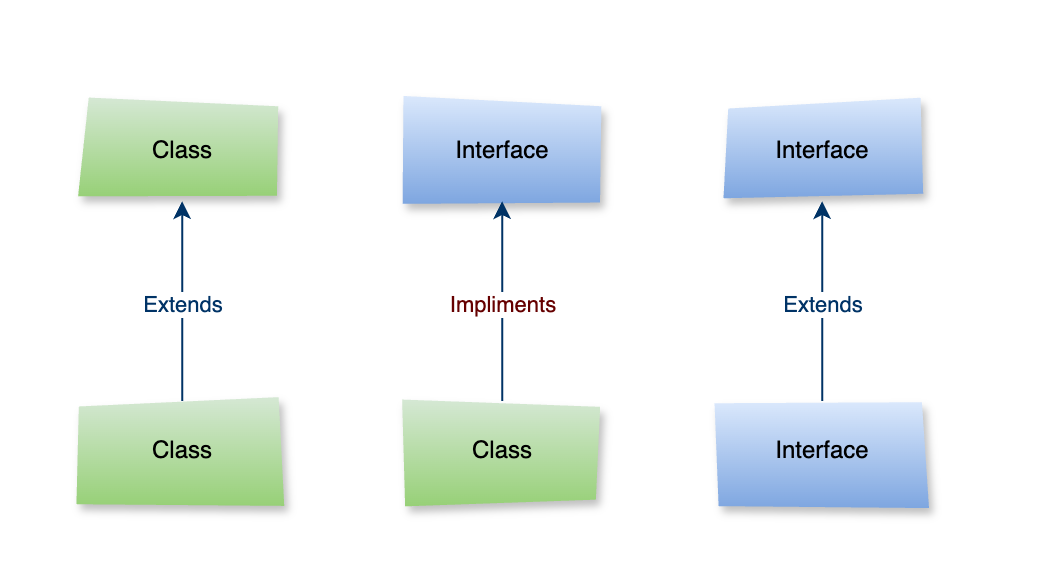
Như hình thể hiện phía trên một class extends từ một class khác, một interface extends từ một interface khác, Nhưng một class thì implements(triển khai/thực hiện) một interface khác.
5. Đa kế thừa trong Java
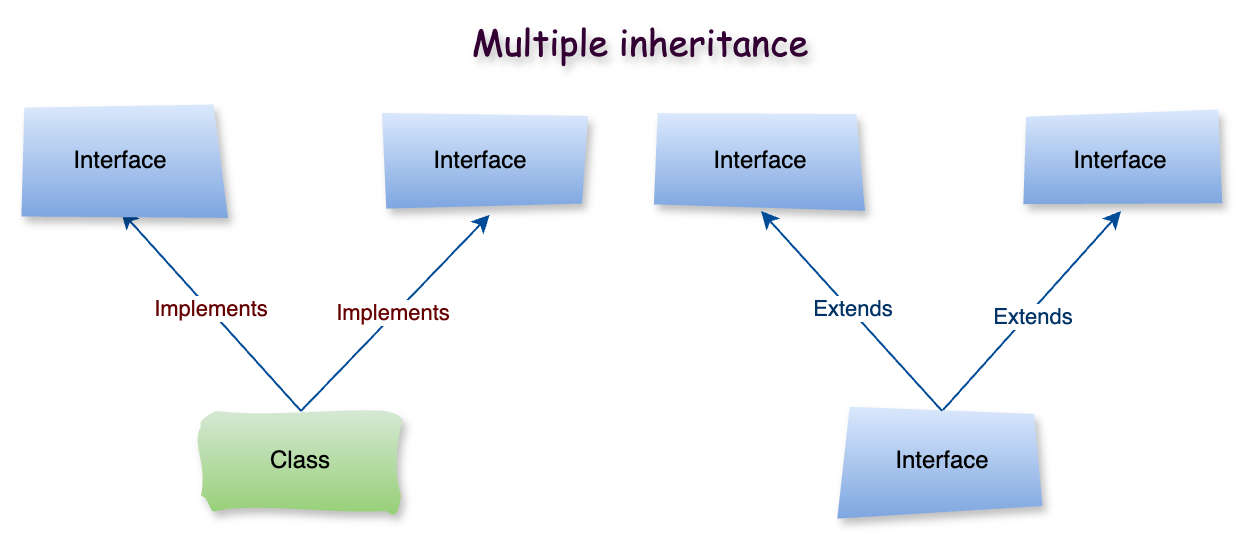
- Một interface có thể extends từ nhiều interface khác.
- Một class có thể implements từ nhiều interface.
– Ví dụ: public interface <interfaceX> extends <interfaceA>, <interfaceB>
// Super interface
public interface BaseService {
default void printMessage() {
System.out.println("Default message from BaseService");
}
}
// Super interface
public interface LogService {
void saveLog();
void printLog();
}
// Một interface có thể extends từ nhiều interface khác.
public interface UserService extends BaseService, LogService {
int addUser(User user);
void updateUser(User userId);
void deleteUser(long userId);
}– Ví dụ: public class <ClassX> implements <ClassA>, <ClassB>
// Một class có thể implements từ nhiều interface.
public class UserServiceImpl implements UserService, CommonService {
@Override
public int addUser(User user) {
System.out.println("-----[ addUser ]-----");
return 0;
}
@Override
public void updateUser(User userId) {
System.out.println("-----[ updateUser ]-----");
}
@Override
public void deleteUser(long userId) {
System.out.println("-----[ deleteUser ]-----");
}
@Override
public void saveLog() {
System.out.println("-----[ saveLog ]-----");
}
@Override
public void printLog() {
System.out.println("-----[ printLog ]-----");
}
@Override
public void connectDB() {
System.out.println("-----[ connectDB ]-----");
}
}6. Các kiểu kế thừa trong Java
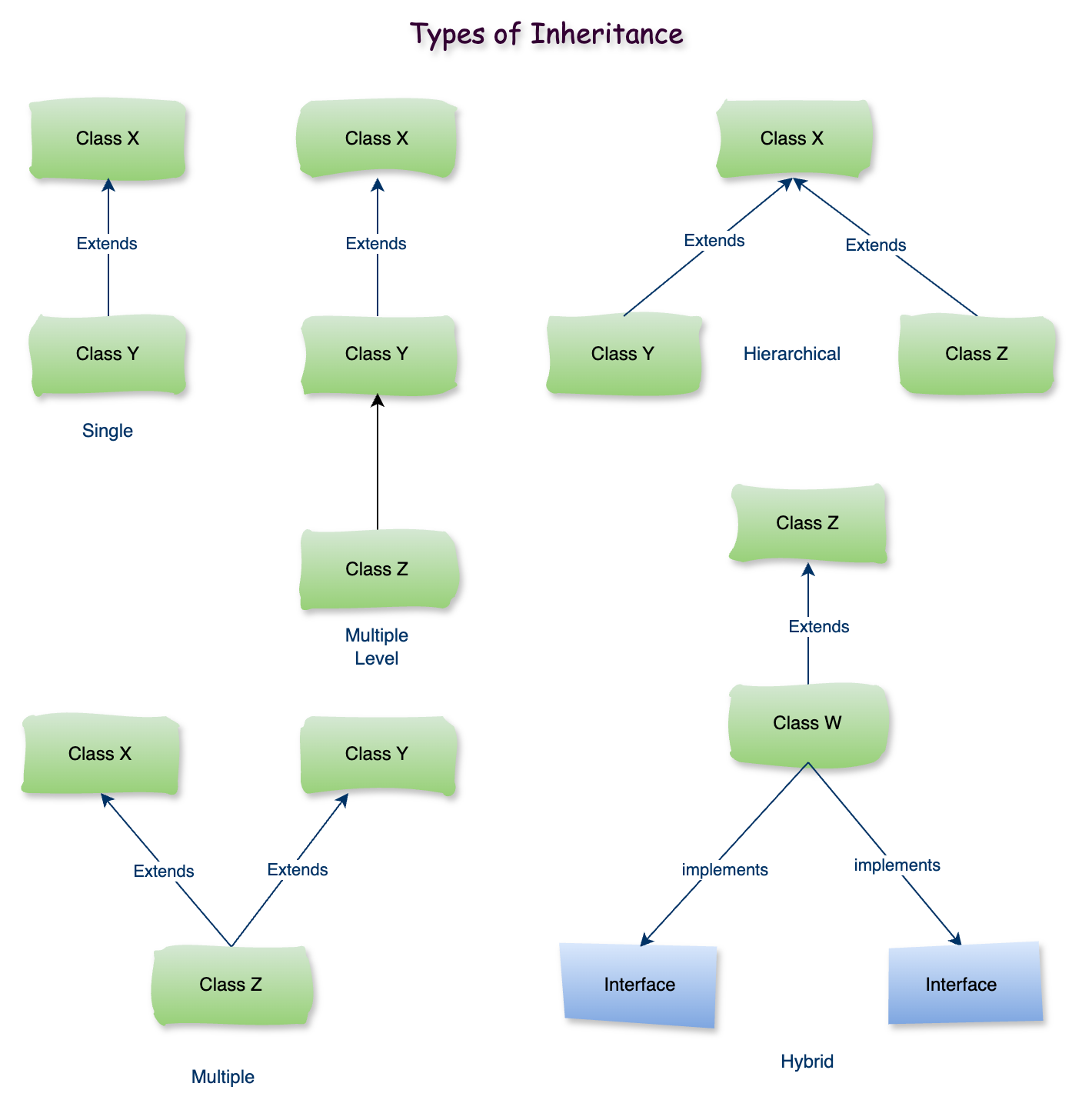
- Single Inheritance
- Multiple Level Inheritance
- Hierarchical Inheritance
- Multiple Inheritance
- Hybrid Inheritance


Không có nhận xét nào:
Đăng nhận xét